
About Trakehners
This noble breed has an interesting history, discover more about the Trakehner horse in the United Kingdom.
Trakehners UK celebrates the noble Trakehner horse by sharing its rich history, promoting the breed’s exceptional performance qualities and supporting its registration, grading and community of enthusiasts in the UK
Who we are
Trakehners UK is the marketing name of the Trakehner Breeders’ Fraternity (TBF). This is a Passport Issuing Authority approved by DEFRA for registering pure and part-bred Trakehner horses. The TBF had to become a Limited Company to achieve this, and we chose to make it a Company Limited by Guarantee; essentially every Member is a shareholder. Later we chose the new informal name to reflect the fact that we are not just about breeding. The Trakehner horse is a performance horse – bred as such for over 275 years using selective breeding, and is now renowned and respected throughout the world. In fact most of the warmblood stud books have a heavy influence from the Trakehner horse.
“ All purebred breeding Trakehners in the main stud book have to be approved by Trakehner judges to ensure they are of the required quality and health to breed purebred Trakehners. Stallions are also required to have full vetting, X-rays and performance testing. Guidance on the rules for mare grading and stallion grading can be found on the Documents page”
If you are interested in joining the TBF, then please look in the membership section on our website, where you will find a membership application form, or make contact with the Membership Secretary, who will be pleased to help you.
The Trakehner Breeders’ Fraternity (TBF) is the only UK body licensed by the Trakehner Verband GmbH in Germany to register, grade and brand horses in the main stud book.
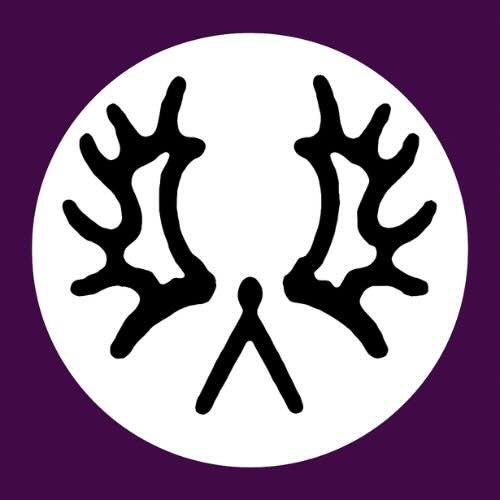
There is the opportunity to have your pure bred registered foal branded with the distinctive double Elk horn brand with the inverted ‘V’ beneath to denote “British Bred”.
British Bred Trakhener Brand

Breed Profile
It has been said that the Trakehner has everything most people are looking for in a performance horse and if you look at the breed’s list of attributes it is easy to see why.
The Trakehner, is the warmblood closet to the British ideal of the modern competition and riding horse, whose upgrading influence of bloodlines is evident in most of the continental sports breeds today. The popularity of this breed in Britain is growing at an astounding rate. The breed height ranges from a minimum of 15.2hh but the average is between 16hh and 17hh. They are usually solid colours, chestnut, bay, black or grey.
The Trakehner is the “Thoroughbred” of warmblood breeds, it is more closely related to the Thoroughbred than other German breeds having had major influence in the stud book from the English Thoroughbred and to a lesser degree the Arab and Anglo Arab. Due to selective breeding the Trakehner has retained the best thoroughbred qualities while keeping its own special character and “type”. The “Lloyds Bank Black Horse” is a Black Trakehner Stallion! Before German unification in 1871, Germany was made up of a number of different states and locally organised breeding areas. As a result horses bred in the area of Hanover became known as “Hanoverian” and a horse born in Westphalia became a “Westphalian”. However the Trakehner is the exception to this breed naming rule, as they are known as Trakehners wherever they are born, the stud book is governed solely by bloodlines. Infact Trakehner stallions were and still are widely used to improve and refine all the regional breeds.
Trakehners History
The Trakehner horse was developed in the early 18th century by King Wilhiem I of Prussia, the father of Friedrich the Great, seeing the need for a new type of cavalry mount for the Prussian army. War tactics had changed and now required a lighter more comfortable horse with more endurance and speed than the heavier horses previously needed to carry armour and haul heavy equipment. The King wanted horses for his officers to ride, attractive enough to make them proud, solid enough to stay sound, with a comfortable, ground-covering trot that would enable to travel quickly and efficiently. He chose the best horses from seven of his royal breeding farms and in 1732 moved them all to the new royal stud at Trakehnen, began selective breeding among them and the Trakehner breed evolved. The breed has been selectively bred since that time with a closed stud book.
History was to deal the Trakehner a nearly fatal blow. The breed had easily recovered from the population being halved during World War I, but in October 1944, as World War II was in its final stages and the Soviets were closing in on the lush and beautiful area around Trakehnen, orders came to evacuate the horses from the Trakehnen Stud. About 800 of the best horses were hastily transferred both by rail and by foot but unfortunately they did not go far enough west. Most of them, together with all their documentation, eventually fell into the hands of the Russian occupation forces and were shipped to Russia. The private breeders and their horses, however, were determined to save their valuable horses.
What followed was a horror story that went down in history as “The Trek”. Hitching their precious breeding stock to wagons laden with personal possessions and all the feed they could carry, these proud East Prussians fled, some 800 horses strong. They were mostly women, children and elderly people and they were leaving their whole lives, bringing along only what their wagons could hold. It was the dead of winter. Snow was deep on the ground, and the broodmares were heavy with foal. Many horses were left behind to be claimed by the advancing Soviets and many were lost or let loose along the way to be eventually taken in by the conquering troops or to die.
The East Prussians headed west, literally running for their lives. They could not stop when mares lost their foals or horses went lame or became ill. Their feed ran out and the horses had to live on what they could scavenge along the way. For two and a half months and 600 miles the nightmare continued, while the refugees were constantly pursued by Soviet troops. At one time it looked like the East Prussians had reached the end. The Soviets had them surrounded on the shores of the frozen Baltic Sea. The only escape was across the treacherous expanse of ice, so across they went – at times knee deep in water covering the ice – galloping to stay ahead of the ice breaking behind them. If any dared to stop or attempt to dodge the fire of the Russian planes overhead, they were doomed to sink helplessly into the freezing water. Many did not make it across.
At last the survivors limped into West Germany, the once proud and beautiful 800 horses reduced to less than 100 pitiful skeletons, carrying wounds from shrapnel. Only the hardiest had survived. The next decade was spent re-establishing the breed in the West. In October 1947, the West German Association of Breeders and Friends of the Warmblood Horse of Trakehner Origin, today know as the “Trakehner Verband” was formed, replacing the East Prussian Stud Book Society. Horses that had fled to the west were spread all over Germany and only a few hundred Trakehner horses of the original 80,000 in East Prussia were available by the time the rebuilding process began, for though between the Trek and various other evacuation attempts, almost 1000 horses had actually reached the safety of West Germany, most of them were eventually lost to the breed. However these horses became the founders of today’s Trakehner horse. A very hardy breed.
Famous Trakehners
Trakehners today continue to win Olympic medals across Dressage, Eventing, and Show Jumping, as well as achieving success in Long Distance Riding and Driving. Their stamina and toughness, particularly when crossed with the Thoroughbred, have made them especially influential in the eventing world.
The record of Trakehners in international competition remains outstanding, with continued success across all Olympic disciplines into the modern era.
Most recently, Trakehners have been at the very top of world sport. TSF Dalera BB by Easy Game, ridden by Jessica von Bredow-Werndl, is one of the most successful dressage horses in history, winning double individual and team gold medals at both the 2020 Tokyo and 2024 Paris Olympics. The Trakehner mare has achieved top-tier success, including multiple European Championship titles and FEI World Cup Final wins (2022, 2023, 2024).
Lordships Graffalo (“Walter”) by Grafenstolz, ridden by Ros Canter, is a highly decorated eventing horse, having notably secured victory in the 2025 Burghley CCI5*-L, 2025 Badminton CCI5*-L, and 2025 Hartpury CCI4*-S, establishing himself as a top-tier performer with numerous double-clear rounds in 2025 and 2024.
Another outstanding modern example is Tsetserleg TSF, by Windfall and ridden by Boyd Martin. Tsetserleg TSF has represented the United States at the Tokyo 2020 Olympic Games, won Individual Gold and Team Gold at the Pan American Games, and was a key member of the U.S. team that secured Silver at the 2022 FEI Eventing World Championships. He has also achieved top placings at Kentucky CCI5* and other premier international events, further underlining the Trakehner’s reputation for stamina, bravery, and consistency at championship level.
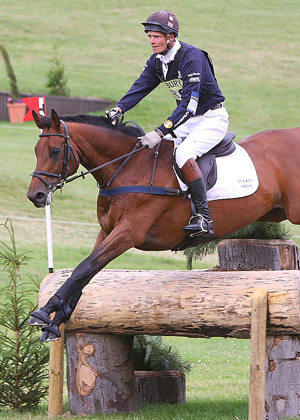
Seacookie TSF (by Helikon XX) was one of the most admired Trakehner event horses of the modern era, particularly under British rider William Fox-Pitt. A German-bred gelding, Seacookie was known for his consistent performance at the highest levels of eventing, with multiple top-tier results including a win at Pau CCI5* and second place at both Burghley and Kentucky CCI5*.
Seacookie began his international career under German rider Ingrid Klimke, who produced him up through the three-star level before he joined Fox-Pitt’s string in 2008. With Fox-Pitt, he finished second at Burghley CCI5* (2010), won Blenheim CCI3* (2012), and claimed the Pau CCI5* title (2013), among other top placings in Kentucky and other premier events.
Seacookie was also honoured as Trakehner of the Year, reflecting his impact both as a performer and as a representative of the breed at elite international level. After an exceptional competitive career, he enjoyed retirement with his owner and passed away in March 2024 at the age of 25, remembered as a true five-star competitor and a crowd favourite.
Other notable Trakehners include Abdullah, who carried Conrad Homfeld to Team Gold and Individual Silver for the USA at the 1984 Los Angeles Olympic Games, and Goldkorn, by Istanbul, winner of the Danish Show Jumping Derby in 1989 under Hugo Simon.
The legendary dressage rider Dr. Reiner Klimke rode numerous Trakehners to Grand Prix level, including the famous Fabian and later Biotop. Peron achieved 4th place at the Atlanta Olympic Games, while Waitaki, partnered by Holger Hetzel, competed successfully on the World Cup and international circuit. Trakehner blood has also played a major role in part-bred success stories, most famously the show jumper Milton. ridden by John Whitaker.
The influence of Trakehners extends further through horses such as Tinka’s Boy, winner of the World Cup Final under Markus Fuchs. Although by the Dutch stallion Amor, his pedigree traces back to the Trakehners Heristal and Hyperion, demonstrating the breed’s lasting impact on modern sport horse breeding.
Historically, the Trakehner’s Olympic legacy began early. At the 1936 Berlin Olympic Games, Trakehners won every medal for the German Olympic team. The Individual Eventing Gold Medal at the Barcelona Olympic Games was also won by a Trakehner.
In Britain, the Trakehner stallion Fleetwater Opposition, by Muschamp Danube, was Junior European Three-Day Event Champion before retiring to stud. Utopian Opposition is competing at Grade A show jumping, and Summersong competed as an Olympic eventer. The mare Corna, by Illuster, was Champion Riding Horse of all breeds in West Germany in 1985.
In driving, Karen Bassett, the world’s leading lady team driver, competes successfully with a team of Trakehner horses, further illustrating the breed’s versatility.
More recent Olympic dressage representatives include TCN Partout, ridden by Anky van Grunsven, and Merlin TSF, ridden by Caroline Hatlapa.
From early Olympic dominance to modern-day championship winners, the Trakehner continues to prove itself as one of the most versatile, enduring, and successful sport horse breeds in the world.